Fourteen Years for Thoughtcrime: Britain’s New Ministry of Truth
In the dying days of a government whose popularity has plummeted to historic lows, Sir Keir Starmer’s administration is rushing through legislation that would make George Orwell’s 1984 look less like dystopian fiction and more like a prophetic blueprint. The new National Security (State Threats) Bill, pushed at breakneck speed through Parliament, threatens to transform Britain into something uncomfortably resembling Oceania – a state where the mere act of quoting forbidden sources becomes a crime punishable by a decade and a half in the Ministry of Love.
The Power to Designate Reality
The bill grants the Home Secretary sweeping, unilateral authority to designate foreign entities as engaged in “state threat activity” – a category treated as equivalent to proscribed terrorist organisations. Unlike the proscription of terrorist groups, which requires parliamentary ratification, this power rests entirely with the Home Secretary, accountable to no one. In 1984, the Ministry of Truth rewrote history to serve the Party’s needs. Here, a single minister can unilaterally decide which organisations are enemies of the state – and by extension, which words, ideas, and sources are forbidden.
The definition of “state threat activity” is so broad as to be meaningless. It encompasses everything from sabotage to the nebulous concept of “foreign interference,” covering any activity that threatens the UK’s “safety and interests” – a phrase pliable enough to mean anything the Party wants it to mean. Together with existing legislation, the Home Secretary now possesses powers that would make even O’Brien nod with approval: the authority to designate any entity that “interferes” with British politics in ways that undermine the “safety and interests” of the country.
Thoughtcrime Made Law
The second part of the bill criminalises collaboration with designated “foreign power” groups – and here the parallels to 1984 become truly chilling. The bill criminalises anyone who “supports, assists and obtains material benefits” from designated groups, including the mere acquisition of information. It also criminalises any person who arranges or addresses a meeting that “supports” or “furthers the activities” of the designated group. Conviction carries a prison sentence of 10 to 14 years – the same punishment as existing terror offences.
In Orwell’s world, thoughtcrime was the unforgivable sin – the crime of holding unorthodox thoughts. In this new Britain, the crime is even more insidious: the crime of quoting. A journalist who merely approaches a source within a designated body for information could face more than a decade in prison. As David Anderson, the government’s former independent reviewer of terrorism legislation, has warned, journalists would be “at risk of prosecution if they were to have contact of any kind with sources within designated bodies or their agents.”
No Reasonable Excuse
The bill offers only the narrowest scope for an accused person to claim a “reasonable excuse” defence. The prosecution need only prove that the accused “ought reasonably to have known” that their conduct would support a designated body. Ignorance of the law – or of the designation itself – cannot be cited as a defence. In 1984, Winston Smith is arrested not for what he did, but for what he thought – his diary, his affair with Julia, his private rebellion against the Party’s control of truth. Here, the state need not prove intent or even knowledge. It need only prove that you should have known – a standard that makes every journalist, every academic, every citizen potentially guilty of a crime they didn’t know they were committing.
This is thoughtcrime by another name: the criminalisation of curiosity, of inquiry, of the very act of seeking to understand the world beyond the Party’s authorised narrative.
The Fate of Journalists and Humanitarians
The implications for public interest journalism are devastating. Jonathan Hall, the government’s current independent reviewer, has raised similar concerns and pushed for the law to include a “reasonable excuse” defence covering the exchange of information. But as drafted, any journalist who works with a source in a hostile foreign government – or simply approaches them for information – could face more than a decade in prison.
Humanitarian and aid workers are equally imperilled. Parliament’s international development committee has already warned that the bill fails to account for the reality that “humanitarian organisations often operate in areas where state-linked actors exercise territorial control,” and that “engagement with all parties to a conflict may be necessary to secure access to affected populations.” In 1984, the Party maintained power through the systematic destruction of truth and the criminalisation of independent thought. Here, the state threatens to criminalise those who deliver life-saving aid to civilians trapped in conflict zones – simply because their work requires them to speak with the wrong people.
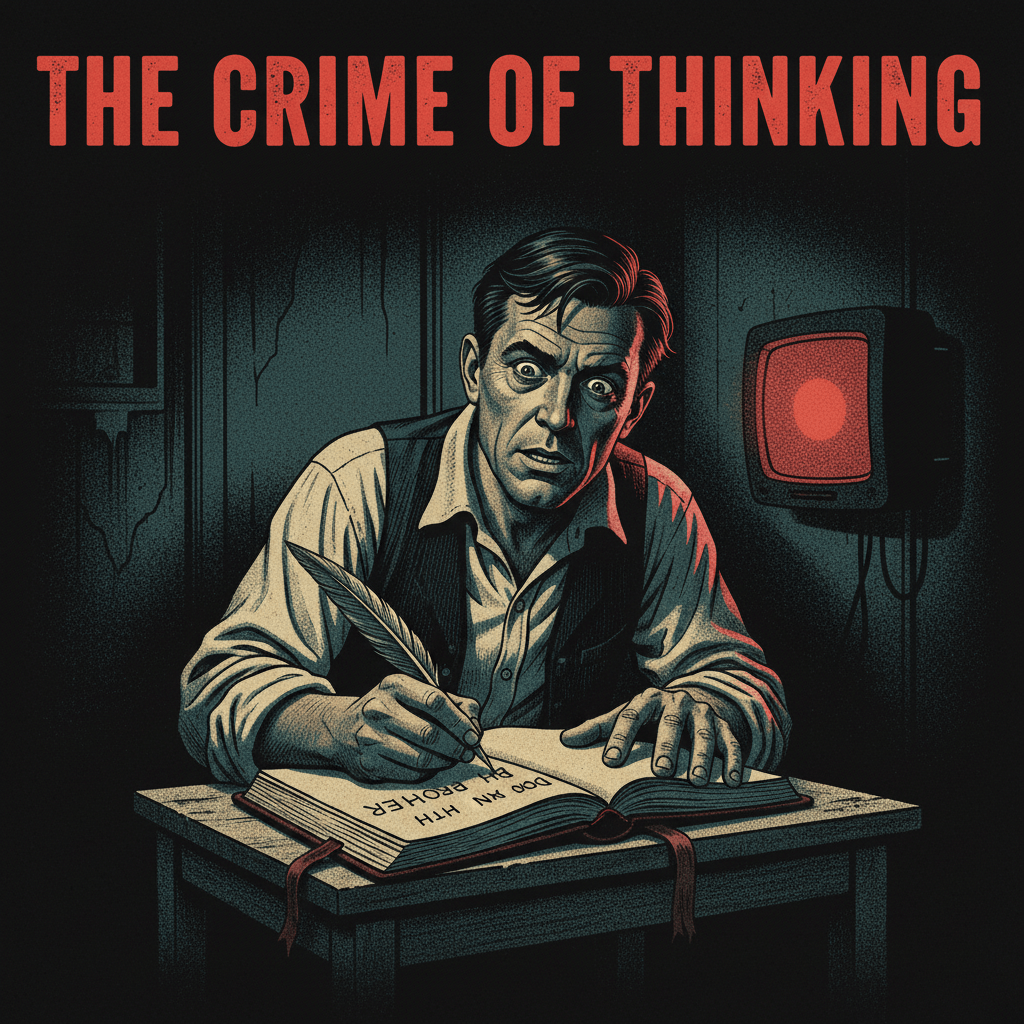
The Ministry of Truth Arrives
Free speech and press freedom groups have raised the alarm that the bill threatens public interest journalism – a view endorsed by two independent reviewers of terrorism legislation. But in a political climate where the government is using its “last gasps” to push through legislation that experts believe poses “serious threats to free speech, public interest journalism and the provision of international humanitarian aid,” the warning signs are unmistakable.
Orwell understood that the most effective tyranny is the one that controls not just what you say, but what you can say – the one that makes certain thoughts literally unthinkable through the machinery of criminal law. The National Security (State Threats) Bill does precisely that. It creates a world where quoting a designated source becomes a crime, where approaching the wrong person for information becomes a decade in prison, where ignorance of the law is no defence because the state has decided that you should have known.
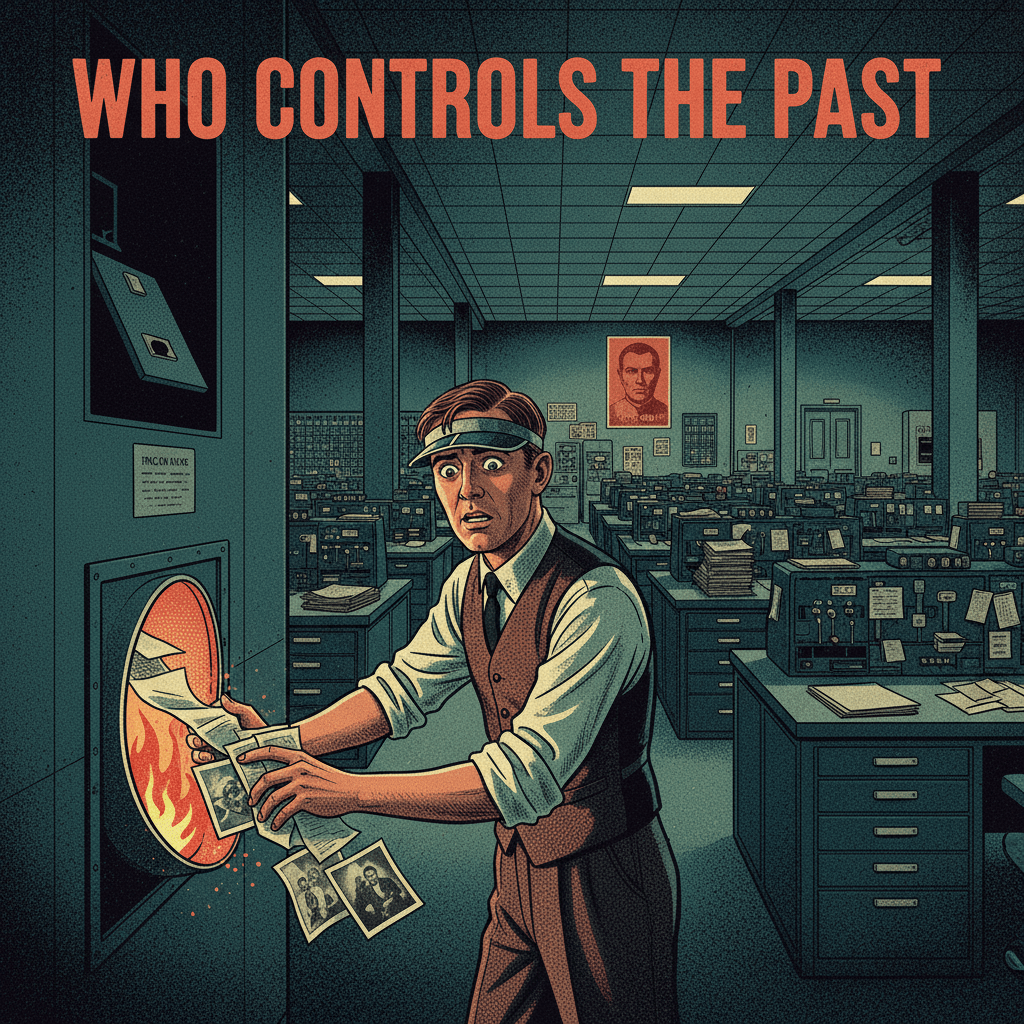
In 1984, the Party’s slogan was “Ignorance is Strength.” In this new Britain, ignorance is no defence – and knowledge is a crime. The Ministry of Truth has arrived. It does not rewrite history. It criminalises those who would seek to record it.


Leave a comment