
Western democracies have long defined themselves against authoritarianism. We are taught that authoritarian states censor newspapers, ban broadcasters, punish dissent, and decide which version of reality the public may hear. In liberal societies, by contrast, citizens are expected to weigh competing claims, challenge power, and make up their own minds.
That distinction is becoming harder to maintain.

The Court of Justice of the European Union has ruled to expose private individuals to criminal prosecution for making “Russia Today” (RT) content publicly available online. This includes prison sentences of up 5 years for individuals who post RT articles or videos on their social media. The case arose in Germany, where individuals were prosecuted after publishing RT DE videos on a freely accessible website. Under the relevant German law, violations carry serious penalties.
Many readers will understandably have strong feelings about RT. Some will see it as state media; others will see it as a source that challenges Western narratives. But the deeper issue is not whether one likes RT, trusts RT, or agrees with RT. The issue is whether democratic societies should criminalise the sharing of information because authorities have deemed the source unacceptable.
That is a much larger question than one broadcaster.
Once governments move from challenging speech to suppressing it, a line has been crossed. Democracies are supposed to answer propaganda with evidence, debate, transparency, and better journalism. They are not supposed to create conditions in which citizens may fear legal consequences for reading, sharing, or discussing material outside the approved information ecosystem.

This is where the language of safety can become dangerous. Restrictions are often justified as necessary to combat “disinformation”, “foreign interference”, or “information manipulation”. These are real concerns. Propaganda exists. Hostile states do attempt to influence public opinion. Falsehoods can cause harm.
But a society that gives the state broad power to decide what citizens may see does not eliminate propaganda. It risks replacing one form of propaganda with another.
Authoritarianism rarely arrives announcing itself as authoritarianism. It usually arrives dressed as protection. It says the public must be shielded from harmful narratives. It says only irresponsible people would object. It says censorship is not censorship, but “content moderation”, “sanctions compliance”, “public safety”, or “defending democracy”.
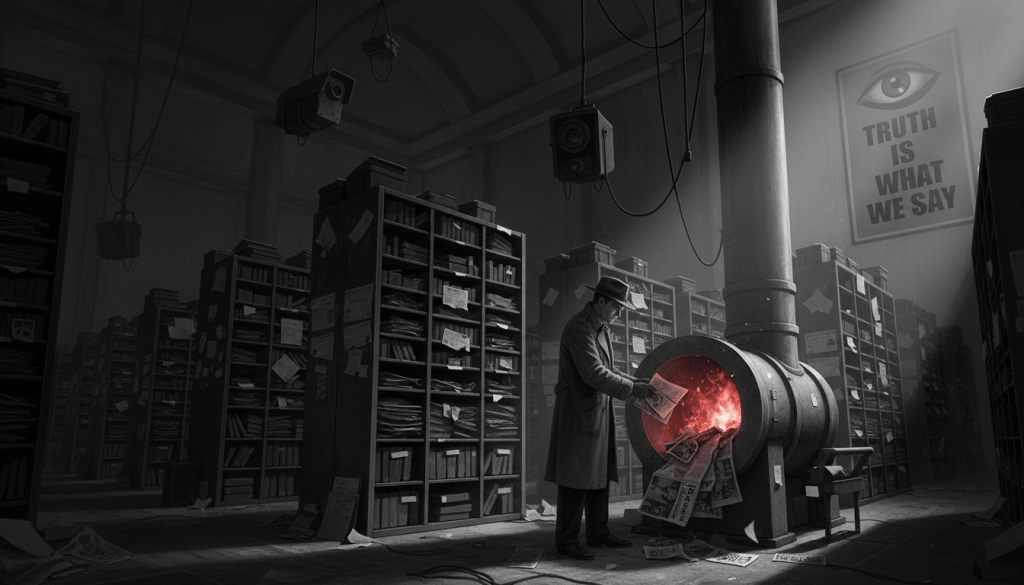
That is authoritarian creep: the slow normalisation of powers that would once have alarmed us.
The danger is not only that certain outlets are banned. It is that the public is trained to accept the principle that some information is too dangerous for ordinary people to encounter. Once that principle is accepted, the category of forbidden information can expand. Today it may be Russian state media. Tomorrow it may be dissident journalists, anti-war voices, whistleblowers, independent publications, or domestic critics of government policy.
The UK has its own reasons to be alert. Independent outlet The Canary was recently ‘debanked’ by Lloyds Bank, and discussion online has linked the case to wider concerns about political pressure, financial exclusion, and the influence of figures such as Morgan McSweeney within the current political landscape. Those claims should be treated carefully unless and until more evidence is publicly available. But the broader concern is legitimate: when media organisations, campaigners, or controversial voices lose access to banking services, people are right to ask whether financial infrastructure is being used, directly or indirectly, to discipline speech.

Debanking is not the same as a formal ban. It can be more subtle. A publication may still be legally allowed to speak, but if it cannot process payments, pay staff, receive donations, or maintain basic operations, its practical freedom is weakened. In modern society, access to banking is not a luxury. It is part of the infrastructure of participation.
That is why information control in the twenty-first century does not always look like a censor with a red pen. It may look like algorithmic suppression, payment restrictions, account closures, platform bans, advertiser pressure, reputational blacklists, or legal uncertainty. The effect can be similar: people learn which opinions are safe, which sources are risky, and which questions are better left unasked.
George Orwell understood this dynamic. 1984 is often remembered for its cameras, slogans, and brutal surveillance state. But its most chilling insight is about thought control. The Party does not merely punish forbidden speech; it narrows the range of thinkable thoughts. It controls language, memory, history, and the boundaries of acceptable reality.
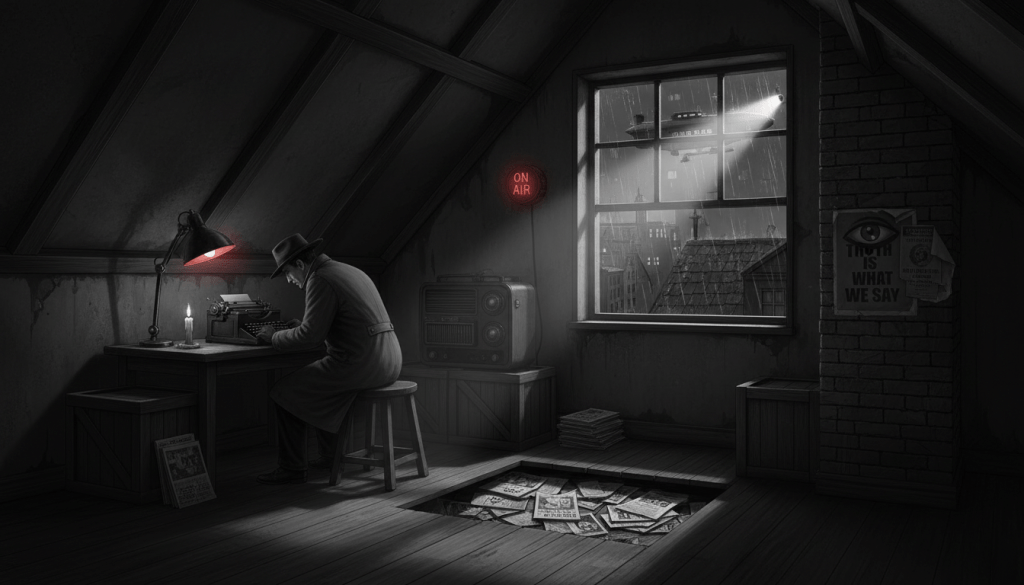
The modern West is not Orwell’s Oceania yet. We still have elections, courts, newspapers, protest movements, and independent voices. It would be careless to pretend otherwise. But Orwell’s warning was never valuable only as a description of total dictatorship. It was valuable because it showed how power always seeks to manage perception.
The question for democratic societies is not whether propaganda exists. It does. The question is who gets to define it, who gets punished for spreading it, and whether citizens are trusted to examine contested material for themselves.
A confident democracy does not fear its citizens reading the wrong article. It does not need to criminalise curiosity. It does not treat adults as passive vessels waiting to be infected by unauthorised ideas.
Instead, it builds public resilience through education, open debate, media literacy, and institutional transparency. It teaches people how to question sources, identify manipulation, compare claims, and recognise bias – including the bias of their own governments and preferred media outlets.
The fight against propaganda should not become a pretext for thought control. The defence of democracy should not require methods that resemble the systems democracy claims to oppose.

If Western governments want to maintain moral authority, they must resist the temptation to control information through bans, fear, financial pressure, or selective enforcement. They should trust citizens with more information, not less.
The moment a society starts punishing people for sharing disapproved material, it should pause and ask a very uncomfortable question: are we protecting democracy, or merely protecting the official narrative?


Leave a Reply