The great swindle of our age is the conflation of capitalism with commerce. It is a semantic trick that has, for decades, persuaded millions of ordinary, hard-working people to defend a system designed to squeeze them dry. The British left, frequently caricatured as anti-business, anti-enterprise and anti-aspiration, is in fact the only political force making a serious argument for genuine competition, fair markets and the dignity of productive work. The real question is not whether the left is anti-business, but why so many businesspeople have been persuaded to defend the very interests that undermine them.
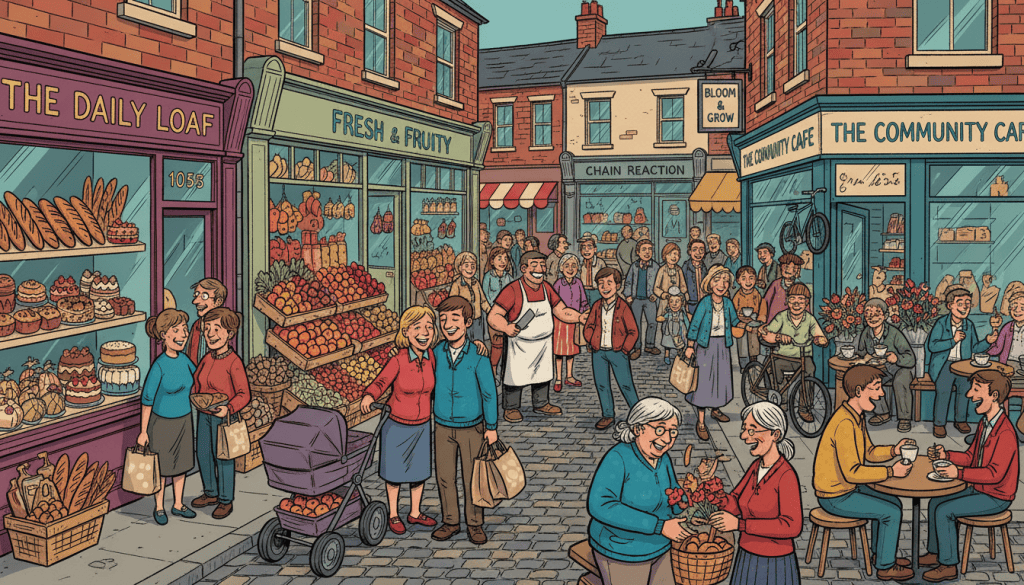
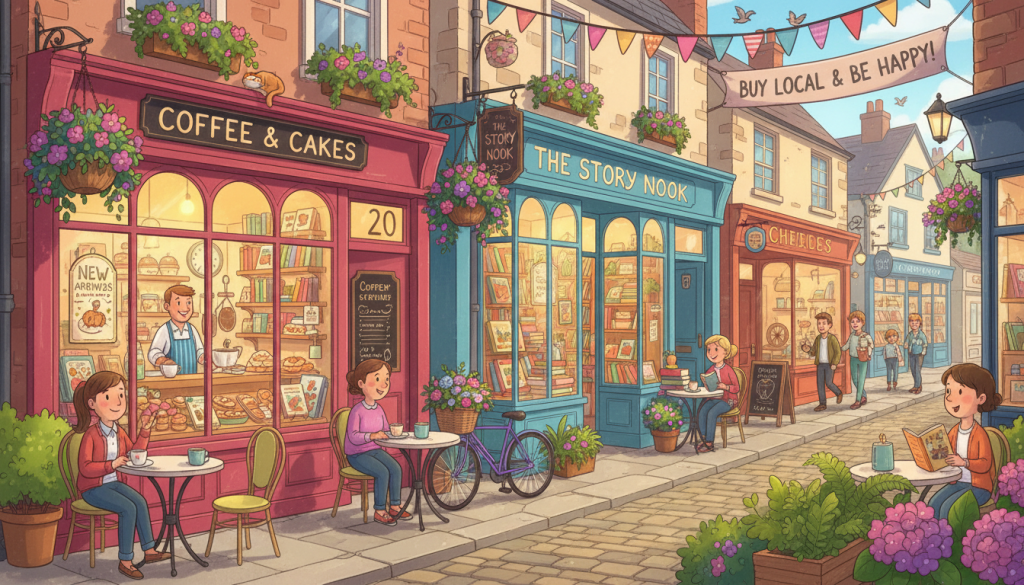
Imagine a high street. There is a baker who rises at four in the morning, a mechanic who can diagnose an engine fault by sound alone, a woman who turned her kitchen-table jewellery business into a shop with two employees. These people are not capitalists. They are participants in commerce, an activity as old as the first Mesopotamian trader who swapped grain for copper and thought himself clever for the deal.
Commerce is horizontal, transparent and competitive. It involves individuals or small groups trading goods and services, barriers to entry are low, no single player dominates, and profit is a reward for fulfilling a specific need. It is, in the deepest sense, a social activity: the baker knows her customers, the mechanic knows his community, the jeweller lives among the people who wear her work.
Capitalism is something else entirely.
The great French historian Fernand Braudel, whose magisterial three-volume Civilisation and Capitalism remains the most profound study of economic life ever written, drew a distinction that ought to be taught in every school in Britain. “Capitalism,” he argued, “only begins where commerce ends.” Ordinary commerce is the realm of the market: competitive, open, bounded by the rhythms of daily life. Capitalism is the zone of high finance, state collusion and deliberate opacity.
Braudel’s evidence was drawn from the 16th and 17th centuries, but his analysis is devastatingly familiar to anyone who has watched the modern British economy. The great capitalists of early modern Europe — the merchant princes of Venice, the Dutch East India Company, the sugar monopolists of Madeira — never wanted to compete in a fair, transparent market. Competition, after all, slices profit margins to the bone. Instead, they secured royal charters, exclusive trading rights and naval protection. The state granted them legal monopolies and effectively outlawed competition. They were not market actors; they were market suppressors.
“It is the zone of privilege,” Braudel wrote, “held by a small elite who bend the rules in their favour.” Capitalism, on this reading, is not the natural evolution or the highest form of the free market. It is its dark shadow.
The relevance to contemporary Britain is almost too painful to spell out. The water companies that loaded themselves with debt, paid out billions in dividends, pumped raw sewage into our rivers and then pleaded poverty when asked to fix the infrastructure. The energy firms that collapsed when wholesale prices rose, having apparently operated without any meaningful hedging, leaving taxpayers to pick up the bill. The outsourcers that hoovered up public contracts, delivered catastrophic failure and were rewarded with yet more contracts. The tech platforms that have used network effects to achieve near-monopoly positions, then deployed their market power to crush smaller rivals or simply buy them before they become threats.
These are not aberrations. They are the system working as intended.
The great ideological conjuring trick of the past half-century has been to persuade ordinary people that the word “capitalism” describes the baker, the mechanic and the jeweller, when in fact it describes the forces that make their lives harder. The baker does not profit from monopoly. She does not have a lobbying arm in Westminster. She cannot offshore her profits or buy back her own shares to inflate executive bonuses. She cannot, when times get tough, demand a bailout from the state whose taxes she has spent a career minimising.
And yet she is the person whose moral legitimacy is invoked every time a politician or a newspaper columnist defends “free markets” and “capitalism” as though the two were interchangeable. They are not. The trick works because language has been deliberately corrupted.
Adam Smith, so often conscripted into the right’s mythology as a kind of patron saint of laissez-faire, would have recognised the swindle immediately. “People of the same trade,” he wrote in The Wealth of Nations, “seldom meet together, even for merriment and diversion, but the conversation ends in a conspiracy against the public, or in some contrivance to raise prices.” Smith understood that the interests of capital were not the interests of the market, and that the former would always seek to subvert the latter. It is a line that should be engraved over the doors of the Competition and Markets Authority, and perhaps also over the entrance to Downing Street.
This is the intellectual foundation on which a serious left economics must be built — and it is far more radical than it first appears. Because once you accept that capitalism and commerce are distinct, and that capitalism is in fact the enemy of the open market, the entire edifice of right-wing economics begins to crumble.
The left’s quarrel, properly understood, is not with enterprise, risk, invention or trade. It is with monopoly, rent extraction, regulatory capture and the quiet conversion of democratic institutions into private insurance schemes for the already powerful. It is not anti-business. It is anti-rigged market. It wants more entrants, not fewer. More bargaining power for workers, because labour markets are markets too, and no market is healthy when one side can dictate terms. More scrutiny of mergers. Less tolerance for monopoly pricing. Fewer barriers to starting a business. Less dependence on debt-fuelled asset inflation as a substitute for real prosperity. More investment in the ordinary preconditions of enterprise: transport, education, health, broadband, energy, housing.
That is not a threat to business. It is the groundwork of a functioning business civilisation.
Karl Polanyi, the Hungarian economic historian, argued that markets do not arise in some pristine state of nature; they are always embedded in law, politics and social norms. The real choice is never between a “free” market and state interference. It is between different kinds of state-shaped market order. One kind protects incumbents, privatises gains and socialises losses. The other tries to disperse power, maintain fairness and ensure that prosperity is broadly shared. The question is not whether the state intervenes, but on whose behalf.
John Maynard Keynes, whose thinking saved capitalism from itself in the postwar decades, understood that markets left to their own devices could settle into wasteful stagnation. When private demand falters, public action is not an alien intrusion but a stabilising necessity. And Mariana Mazzucato, the economist whose work on the entrepreneurial state has reshaped modern industrial policy, has spent years documenting what polite British discourse still struggles to admit: that the state is not merely a meddlesome bystander but very often the patient, risk-taking actor that makes private innovation possible in the first place. The smartphone in your pocket, the medicines in your cabinet, the internet beneath your daily life — these are not monuments to solitary private genius. They are products of mixed systems, long public investment and collective risk-taking.
The left, when it remembers this, has a much stronger story to tell than the one its opponents prefer to tell about it.
That story begins with a proposition so simple it should be a truism: social justice is economically efficient. Equality is not merely a moral good; it is a commercial one. More equal societies tend to have broader consumer demand, healthier workforces, higher trust, lower insecurity and less wasteful hoarding at the top. If ordinary people have money in their pockets, small businesses have customers. If workers are not exhausted, underhoused and one boiler breakdown from disaster, productivity improves. If childcare is affordable and transport works, labour supply expands. If housing is no longer treated primarily as a speculative asset, the rest of the economy can breathe.
The British right likes to imply that redistribution punishes success. Often it does something much more practical: it creates the customer base on which legitimate success depends.
This is why the opposition between “left” and “pro-business” has always been false. A serious left programme would not seek to abolish commerce; it would seek to rescue commerce from the forces that suffocate it. It would defend the shopkeeper against the monopolist, the tenant against the rentier, the productive firm against the asset-stripper, the worker against the wage suppressor, the taxpayer against the bailout culture that appears only when large balance sheets are in danger.
Healthy competition requires healthy citizens. It also requires rules. There is nothing radical about saying that markets need referees, or that freedom for a handful of dominant actors can mean unfreedom for everyone else. The grocer does not become freer because a supermarket chain can undercut, acquire, squeeze suppliers and then raise prices once the field is cleared. The software start-up is not liberated by network monopolies that buy rivals before they become threats. The young entrepreneur is not empowered by a banking system more interested in property lending than productive investment.
The question of money
All of which leads to the fiscal question that dogs every prospective left government in Britain: how, exactly, is this paid for?
Here the debate around Modern Monetary Theory becomes interesting, and politically unavoidable. MMT is often caricatured — wilfully, by its critics — as the idea that governments can simply print unlimited money without consequence. That is not the serious claim. The serious claim, associated with economists such as Stephanie Kelton, Randall Wray and Warren Mosler, is that a sovereign currency-issuing government faces fundamentally different constraints from a household. The limit is not some arbitrary pot of money but the real capacity of the economy: labour, skills, energy, materials, productive slack and, crucially, inflation.
This does not mean deficits do not matter. It means they matter differently. A future left government influenced by MMT would likely argue that the central question is not “where will the money come from?” in the household sense, but “do we have the real resources to do this without overheating the economy, and are we using fiscal policy to expand productive capacity rather than merely bidding up prices?”
Kelton, in her 2020 book The Deficit Myth, put the point with disarming clarity. “The national debt,” she wrote, “is not a burden on future generations in the way we’ve been led to believe. The real burden is the political choice to tolerate unnecessary unemployment, crumbling infrastructure and underfunded public services when we have the capacity to address them.” It is a challenge to the entire moral architecture of Treasury orthodoxy, and it deserves to be taken seriously.
Even critics of MMT should concede the value of its challenge to the austerity reflex that has dominated British economic policy for a generation. For too long, Britain has behaved as though the only responsible state is a timid one, even while its infrastructure frays, its public realm decays and its private sector struggles under the weight of low demand, poor transport, high housing costs and chronic underinvestment. A left government need not adopt MMT as scripture to learn from its central insight: the real danger is not always spending too much, but failing to spend on what makes future prosperity possible.
What business actually wants
And that brings us back to business. What, after all, do most decent businesses actually want? Not libertarian fables. They want customers. They want reliable roads and trains. They want a healthy and educated workforce. They want affordable energy, predictable regulation, access to credit, functioning courts and a society that does not periodically fracture under the stress of mass insecurity. They want, in short, the very social foundations the left is usually mocked for defending.
The irony is almost comic. Many people who call themselves defenders of capitalism are, in practice, defending an economic order that makes life harder for actual businesspeople while showering advantage on those best able to avoid competition altogether. The baker is conscripted to defend the hedge fund. The self-employed electrician is asked to cheer for a system of privatised extraction. The aspiring entrepreneur is told that any challenge to concentrated wealth is an attack on their own ambition.
It is a conjuring trick, and not a subtle one. Braudel saw it clearly four decades ago. “Capitalism,” he wrote in the final volume of his great work, “is the anti-market.” The people who dominate modern economies are not the heroes of competition but its saboteurs. They do not want the rough-and-tumble of the open market. They want the quiet certainties of the captured state.
If the British left has any rhetorical task now, it is to speak more plainly about this distinction. Commerce is good. Enterprise is good. Profit earned by meeting a need is good. Innovation is good. What is not good is an economy that hollows out productive life while calling the process freedom. What is not good is monopoly masquerading as merit. What is not good is the permanent upward transfer of wealth justified in the language of market virtue.
A left economics that takes social justice seriously is not offering the country less dynamism, less creativity or fewer opportunities. It is offering the possibility of more real competition, more widely shared prosperity and more honest commerce. It is saying that a market should be a place where people rise by serving others better, not by cornering the field and writing the rules.
The baker, the mechanic, the jeweller — they have nothing to fear from this argument. They have everything to gain from it. The only people who lose are those who have been winning unfairly all along. And if that sounds radical, perhaps it is only a measure of how far we have drifted from the common sense that once told us: a fair day’s work for a fair day’s pay, and a market that works for everyone, not just the few.


Leave a comment