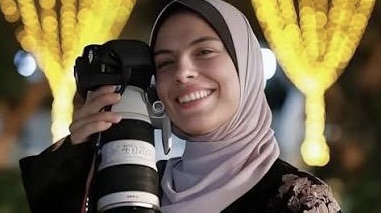
The missile that tore through the Hassona family home in Gaza City on 16 April 2025 did not just kill Fatma Hassona—it killed ten of her relatives, including her pregnant sister, erased an entire lineage of memory, and sent an unmistakable message to anyone still documenting the carnage: you are not safe, your family is not safe, and the truth you carry will be buried with you. This was not an isolated tragedy. It was the latest, and one of the most chilling, acts in a systematic, multi‑front campaign by the Israeli military to eliminate the men and women who expose what international tribunals, human rights organisations, and a growing global movement have revealed as genocide.
A 25‑Year‑Old Lens, Silenced
Fatma Hassona was born in Gaza on 2 March 2000. She came of age under blockade and bombardment, and when the full‑scale assault began in October 2023, she picked up her camera. Since foreign correspondents were banned from entering the Strip, it was left to Palestinians like Hassona to show the world what was happening. She documented massacres, the grief in children’s eyes, the steadfastness of fathers and mothers clinging to life amid the ruins.1
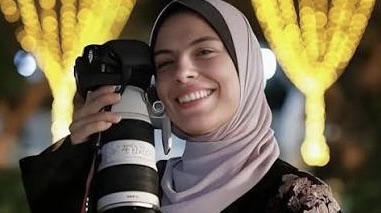
Her work caught the attention of Iranian filmmaker Sepideh Farsi, who began filming video conversations with Hassona from afar. The resulting documentary, Put Your Soul in Your Hand and Walk, was selected for the prestigious ACID section of the Cannes Film Festival.2 Hassona learned the news on 15 April 2025. She was “glowing with joy”, Farsi recalled. The next day, an Israeli drone fired two precision missiles into the second‑floor apartment where Hassona lived with her family in the al‑Tuffah neighbourhood. The missiles were programmed to explode at that exact location—a detail later confirmed by a Forensic Architecture investigation. “Two missiles fired from a drone sliced through her building and exploded on the floor where Fatma lived, as they had been programmed to do,” Farsi said. “It was a targeted attack.”3
The Israeli military’s justification echoed the template it uses after every such killing: it claimed to have struck “a Hamas militant”. Farsi knew the family intimately and dismissed the claim as “nonsense”. Nonetheless, the destruction was absolute. With Hassona’s death, the number of journalists reported killed in Gaza since October 2023 climbed to at least 157, according to the International Federation of Journalists4, and some counts exceed 200.
The “Double‑Tap” Doctrine: Amal Khalil and the Second Strike
If the killing of Fatma Hassona demonstrated Israel’s willingness to eliminate individual journalists and their families, the murder of Lebanese reporter Amal Khalil on 22 April 2026, laid bare a tactic designed to kill rescuers, witnesses, and anyone who dares to come close: the “double‑tap” strike.5
Amal Khalil, a 43‑year‑old correspondent for the Lebanese newspaper Al‑Akhbar, had covered southern Lebanon since the 2006 war. She chronicled the destruction of homes, the killing of children, and the slow erasure of civilian life along the Israel–Hezbollah faultline. In the months before her death, she had received threats from an Israeli WhatsApp number warning her to stop reporting or to leave Lebanon “if she wanted her head to remain on her shoulders”.6
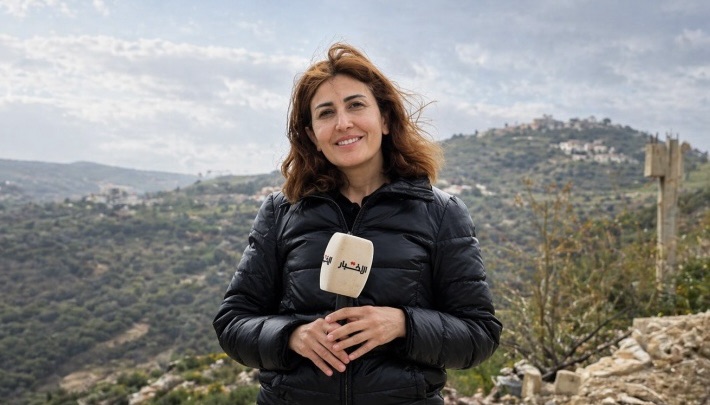
On the day she was killed, Khalil and her colleague Zeinab Faraj were covering an earlier Israeli drone strike on their vehicle near the village of al‑Tiri. Drones once again targeted them and chased them as they fled to a nearby house for shelter. Then came the second strike. The house they had entered was hit by precision missiles from the drones, trapping Khalil under the rubble. The UN alerted and coordinated rescue teams, including the Lebanese Red Cross, who rushed to the scene but were forced back by continued Israeli fire and stun grenades. Khalil remained buried for more than seven hours. The Israelis knew she was injured and dying so they blocked all attempts by rescuers to save her, and waited for her to die. After 7 hours, when the Israeli drones had monitored the light of her heat signature fade to nothing, rescuers were finally allowed to reach her, she was dead.7
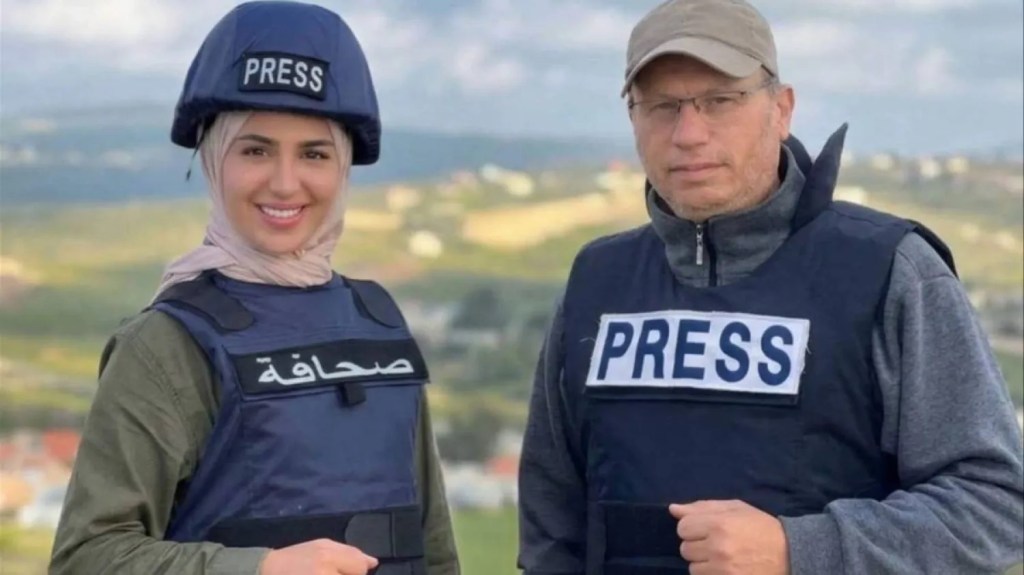
The “double‑tap” is not a new invention. It is a deliberate military method: an initial strike is followed minutes later by a second on the same location, timed to hit first responders, medics, and journalists who have rushed to help. The tactic is “irreconcilable with the conduct of a professional, legally advised and trained military force,” according to Janina Dill of the Oxford Institute for Ethics, Law and Armed Conflict.8 Yet it has become a hallmark of Israeli operations. Less than a month before Khalil’s killing, on 28 March 2026, a double‑tap drone strike on a clearly marked “PRESS” vehicle in southern Lebanon killed three journalists: Ali Shoeib (Al‑Manar), Fatima Ftouni (Al‑Mayadeen), and her brother and cameraman Mohammed Ftouni. Subsequent strikes also killed two paramedics who arrived to help. The IDF later circulated a photoshopped image of Shoeib in military gear in an attempt to retroactively paint him as a Hezbollah operative—an image it was forced to admit had been digitally altered.9,10
A Strategy of Systematic Slaughter
The numbers alone are staggering. In 2025, a record 129 journalists and media workers were killed worldwide; two‑thirds of them—86—were killed by Israeli forces, according to the Committee to Protect Journalists (CPJ).11 The CPJ further classified 47 of these killings as “murder” because they were intentional; Israel was responsible for 81% of those. The organisation states plainly that the Israeli military has now carried out more targeted killings of journalists than any other government’s military since CPJ began keeping records in 1992.12
This is not collateral damage. The pattern is so consistent, so widespread, and so brutal that it defies any explanation other than a deliberate policy. The Lemkin Institute for Genocide Prevention has declared that Israel’s attacks on journalists “form part of a wider genocidal pattern”.13 Reporters Without Borders has filed multiple complaints with the International Criminal Court.14 Human Rights Watch has documented “apparently deliberate attacks on journalists” in both Gaza and Lebanon.15
Israel’s standard response—that it never intentionally targets journalists—collapses under the weight of forensic evidence. The Forensic Architecture report on Hassona’s killing concluded that the missiles were programmed to hit her specific apartment.16 Al Jazeera’s bureau chief Wael al‑Dahdouh was broadcasting live when an Israeli airstrike killed his wife, two children, and a grandson.17 When the UN Special Rapporteur on the occupied Palestinian territories, Francesca Albanese, called the labelling of six Al Jazeera journalists as “terrorists” a “death sentence,” she was merely stating the obvious.18
Why Kill the Messenger?
The reason this campaign is being waged with such ferocity is not hard to discern. Journalists are the eyes and ears of the world. In Gaza, where Israel has imposed a total ban on foreign media access, Palestinian reporters are the only source of independent information. The footage they shoot, the stories they file, are the raw material for every genocide determination, every war‑crimes complaint, and every international protest. As Lebanese President Joseph Aoun said after Amal Khalil’s killing, “Israel deliberately targets journalists in order to conceal the truth about its crimes”.19
Killing a journalist is therefore not just a tactical act; it is a strategic imperative for an army facing allegations of crimes against humanity. When the killing extends to entire families, the message is even more potent: anyone who bears witness, and anyone connected to that witness, will be eradicated. It is terrorism by state ordinance, designed to sever the link between atrocity and global consciousness.
Conclusion
The deaths of Fatma Hassona and Amal Khalil are not separate events. They are two coordinates on the same grim map—a map that runs from the crumbled homes of Gaza’s al‑Tuffah neighbourhood to the olive groves of southern Lebanon, from the banned documentary at Cannes to the rubble of a house in al‑Tiri where a veteran reporter spent her final hours buried beneath concrete and Israeli fire. The names pile up: Hassona, Khalil, Shoeib, Ftouni, Abdallah, Abu Dagga, Salama—the list grows longer every week.20 Each one was a witness. Each one was murdered, along with their families, because what they saw and what they showed the world was too dangerous to be allowed.
Israel’s war on journalism is not a side effect of its military campaigns. It is the central pillar of a strategy to blindfold humanity while a genocide unfolds. And as long as the international community responds with statements of concern rather than concrete action—sanctions, arms embargoes, prosecutions—the missiles will keep striking the second‑floor apartments, the houses where journalists run for cover, and the ambulance crews that come to pull them from the rubble. The first casualty of war may be truth, but in Palestine and Lebanon today, the first target is the truth‑teller, and the second strike is always waiting.
References
- Documenting the Destruction of the Cultural Sector in the Gaza Strip – Fatima Hassouna, Palestine Studies.
- Cannes 2025 Review: Put Your Soul on Your Hand and Walk (Sepideh Farsi), ICS Film.
- Fatma Hassona’s death in Gaza was ‘targeted’ killing, film director tells Cannes, France 24, 15 May 2025.
- War in Gaza, International Federation of Journalists.
- What we know about Israel killing Lebanese journalist Amal Khalil, Al Jazeera, 23 April 2026.
- Israel assassinates Lebanese journalist Amal Khalil after Mossad threats, Yeni Şafak, 24 April 2026.
- Lebanon: Lebanese journalist Amal Khalil killed in targeted attack by Israel, International Press Institute, 23 April 2026.
- What is a ‘double tap,’ and why has Israel’s use of it outraged so many?, NBC News, 27 August 2025.
- Israel Defense Forces admits to posting fake image of Lebanese journalist killed in strike, ABC News, 30 March 2026.
- Hundreds in Beirut mourn journalists killed in Israeli strike, BBC News, 29 March 2026.
- Record 129 journalists killed worldwide in 2025; Israel responsible for two‑thirds, BNO News, 26 February 2026.
- Journalist deaths reach new high in 2025 — CPJ, Deutsche Welle, 25 February 2026.
- The Lemkin Institute Statement on Israeli Attacks on Journalists in Lebanon, 7 April 2026.
- RSF files fifth complaint with ICC about Israeli war crimes against journalists in Gaza, Reporters Without Borders, 30 September 2025.
- Lebanon: Seek Justice for Journalists Killed by Israeli Forces, Human Rights Watch, 13 October 2025.
- Forensic Architecture investigation: missiles targeted Floor 2, France 24, 15 May 2025.
- ISPT0586 – October 25, 2023: Al‑Dahdouh family airstrike, Airwars.
- UN rapporteur condemns Israeli ‘death sentence’ claim trying to silence last Gaza journalists, Asia Pacific Report, 24 October 2024.
- Lebanese President Joseph Aoun: Israel deliberately targets journalists to conceal truths, Al Jazeera, 23 April 2026.
- Who are the Lebanese journalists killed by Israel since 2 March?, The New Arab, 23 April 2026.
“`
 Edward Torsney
Leave a comment