Prologue: The Ghost of the Desert
The sun over Mesopotamia has not changed in two thousand years. It is the same merciless eye that watched the legions die, that boiled the blood in Roman veins and baked their scarlet cloaks into the earth. And now, in the early spring of 2026, it watches again—this time on the glittering waters of the Strait of Hormuz, where another superpower’s war machines drift in silent formation, waiting for an enemy who will not fight the way they expect.
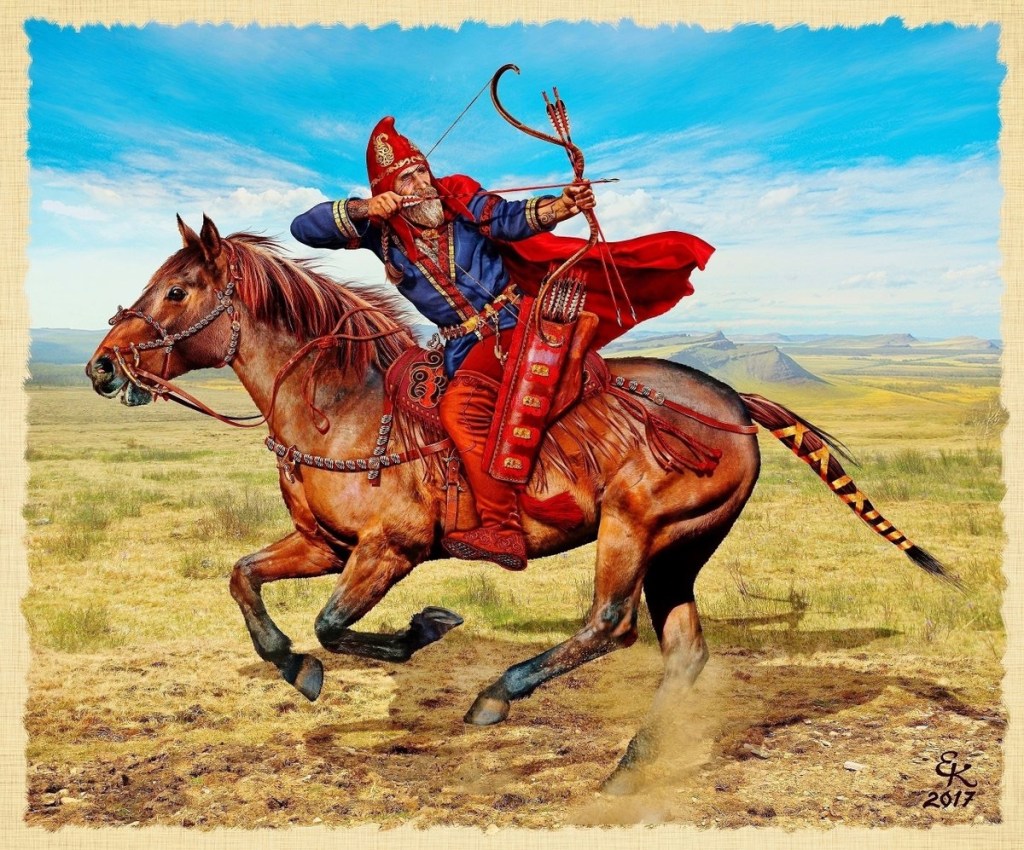
The Plains of Carrhae — 53 BC
The March
The dust rose in a column visible for thirty miles.
Forty-three thousand men moved across the Mesopotamian plain—seven legions of Rome, the finest infantry the world had ever known, their bronze and iron catching the sun in waves of reflected terror. Marcus Licinius Crassus, sixty-two years old, wealthy beyond measure but starving for the one thing money could not buy, rode at their head on a horse draped in purple.
He had conquered slaves. He had crushed Spartacus. But Caesar had conquered Gaul, and Pompey had conquered the East, and Crassus would not die a rich man forgotten by history [1].
“Syria is ours,” he told his officers that morning, wiping sweat from his eyes. “Parthia will be ours. The treasures of Ctesiphon will fill the Treasury of Rome, and my name will stand beside Alexander’s.”
Gaius Cassius Longinus, his quaestor, glanced at the horizon. “The Armenian king advises us to march through the hills, General. He says the Parthians will not fight us in the mountains—their cavalry cannot maneuver there.”
Crassus waved a dismissive hand. “Armenians are afraid of their own shadows. We are Romans. We march where we please.”
An Arab chieftain named Ariamnes rode forward, his smile white against his dark beard. He had been a friend of Pompey, he said. He knew the Parthians. He knew the best route—a shortcut across the open plain, where the legions could spread their wings and fly straight to victory [2].
“Follow me,” Ariamnes said, “and you will crush them before they know you’ve come.”
He did not mention that the Parthians had paid him well to lead Rome into the desert.
The First Volley
They had marched for days. The Euphrates was behind them now, and the land had turned to yellow dust and scrub. The men’s mouths were dry. Their water skins hung empty. And then, shimmering on the horizon like a mirage, the Parthians appeared.
At first, they seemed few—perhaps ten thousand, their cloaks pulled over their armor to conceal their numbers. The Romans laughed. Against forty-three thousand, ten thousand would be swept away like chaff.
Then the Parthians dropped their cloaks.
The sun blazed off a thousand cataphracts—heavy cavalry encased in scale armor, their horses sheathed in bronze, lances gleaming like needles of fire. Behind them, nine thousand horse archers spread across the plain in a line that stretched from one horizon to the other. And then the drums began.
Boom. Boom. Boom.
Parthian war drums, covered in human skin, beaten with human thigh bones, echoed across the flat earth like the heartbeat of hell itself [3]. The Roman horses stamped and whinnied. The legionaries gripped their pilums and tried to remember they were soldiers of the Republic.
Crassus formed them into a massive square—twelve cohorts on each side, cavalry protecting the flanks. It was the formation of an army that expected to be surrounded. It was the formation of an army that had already lost.
The horse archers advanced. They did not charge. They simply rode closer, raised their composite bows—weapons that could drive an arrow through bronze plate at two hundred paces—and released.
Thwip. Thwip. Thwip.
The sound was soft at first, like birds taking flight. Then it became a hiss, then a roar, then a dark cloud that blotted out the sun. Arrows fell like rain—tens of thousands of them, their iron tips seeking flesh.
“Testudo!” the centurions roared.
The legionaries locked their shields overhead and to the front, forming a shell of curved wood and iron. The arrows clattered against them like hail on a roof. Some found gaps. Men screamed and fell. Others were pinned where they stood—their feet nailed to the earth, their shields riveted to their arms through their own flesh [4].
Publius Crassus, the general’s handsome son, led his Gallic cavalry in a desperate charge. The Parthians fled before him, just as they always fled before Roman courage. Publius pursued, his blood singing with triumph—
And then they turned.
The Parthian shot. The greatest trick of the steppe. Riding away at full gallop, they twisted their bodies and loosed arrows backward with terrifying accuracy. Gauls tumbled from their saddles. Horses screamed and collapsed. And when Publius’s charge had spent itself, the cataphracts appeared—a wall of armored men and beasts that swept through his survivors like a scythe through wheat [5].
They brought his head to his father on the point of a spear.
Part Three: The Night
Crassus looked at his son’s face—the gray flesh, the open eyes—and for a moment he was not a general but a father, broken beyond repair. Then the arrows began again.
The Parthians had camels. Thousands of camels, laden with arrows, following the horse archers across the plain. They shot all day. They shot all night. They shot until the Roman dead lay in heaps and the wounded cried for water that would never come.
When dawn broke, twenty thousand Romans lay dead. Ten thousand more were captured, marched east into slavery, never to see Italy again. Crassus himself was lured to a parley and killed—molten gold poured down his throat, the Parthians said, to quench his legendary thirst for wealth [6].
The Parthians lost fewer than a hundred men.
Gaius Cassius led what remained—barely ten thousand—back to Syria, stumbling through the darkness with his head down and his heart full of something that would one day become conspiracy and assassination. But that night, there was only survival.
And in the Parthian camp, Surena—the general who had done the impossible—watched the fires of his victory and waited for the messenger he knew would come. King Orodes was jealous. King Orodes would not suffer a rival’s glory.
Surena would be dead within the year, murdered by his own king for the crime of winning too completely [7].
The Lesson Unlearned
Two thousand years passed. Empires rose and fell. The composite bow gave way to gunpowder, then to jet fuel and precision guidance. But the geometry of war remained unchanged.
In Washington, strategists studied maneuver warfare. They planned for set-piece battles, for armored thrusts, for the clash of great armies on open ground. They built weapons of extraordinary sophistication—aircraft carriers that cost thirteen billion dollars, stealth bombers that could penetrate any defense, missile defenses that could track and kill incoming threats with godlike precision.
They forgot to ask what happens when the enemy refuses to play.
Current Day – The Strait of Hormuz
Part One: Operation Epic Fury
The first strikes came on February 28, just as the sun rose over the Zagros Mountains [8].
Tomahawk cruise missiles, launched from destroyers in the Arabian Sea, carved through the morning sky at five hundred miles per hour. Their targets: the Iranian naval bases at Bandar Abbas and Konarak, the converted drone carrier Shahid Bagheri moored at its berth, the submarines nestled in their pens, the radar installations along the coast.
President Donald Trump announced the operation from the White House briefing room, his voice flat and final. “The Iranian regime has threatened international shipping for the last time. Operation Epic Fury will annihilate their naval forces and restore freedom of navigation to the Strait of Hormuz” [9].
At the Pentagon, General Dan Caine briefed reporters on the opening salvo. “Eleven Iranian warships in the Gulf of Oman at the start of this operation. As of this morning, they have zero. The Iranian navy has been denied the ability to project power beyond its own shores” [10].
Satellite images released by CENTCOM showed smoke rising from Bandar Abbas. The Shahid Bagheri—a converted container ship with a ski-jump ramp for launching drones—lay twisted against its pier. The forward basing ship IRIS Makran burned at the waterline. Frigates of the Jamaran and Alvand classes had been reduced to burning hulks [11].
In Tehran, the Supreme Leader was dead—killed in the first wave of strikes, along with several senior commanders. The Islamic Republic had been decapitated [12].
And then the drones came.
Part Two: The Modern Arrow
They did not come from the sky where American radar expected them. They did not come in formation, announcing themselves like gentlemen. They came from tunnels—hundreds of tunnels carved into the mountains of Iran, their entrances hidden for decades, their interiors filled with row upon row of triangular-winged aircraft mounted on launchers [13].
Shahed-136s. The “modern arrows” of the Parthian playbook.
Each cost about twenty thousand dollars to produce. They were not stealthy. They were not fast. They were not smart in the way American weapons were smart—they carried no sophisticated sensors, no artificial intelligence, no datalinks that could be jammed. They simply flew toward their targets, propeller engines buzzing like lawnmowers, and exploded when they arrived [14].
The first wave—fifty drones—crossed the Strait of Hormuz at low altitude, skimming the waves to avoid radar. American destroyers detected them at fifteen miles. The Phalanx systems spun up. The Standard Missiles leaped from their vertical launch cells, each one a million-dollar dart seeking a twenty-thousand-dollar target [15].
Splash. Splash. Splash.
Thirty-seven drones fell to the sea. Thirteen kept coming.
One struck the parking lot outside the U.S. Consulate in Dubai—a fireball captured on cellphone video, shared millions of times within hours [16]. One crashed into a tactical operations center in Kuwait, killing six American service members [17]. One found the CIA station in Riyadh, smashing through a window and igniting a fire that burned for hours [18].
And while the Americans counted their dead and calculated the cost—thirteen drones destroyed at a cost of perhaps $260,000 to Iran, versus forty million dollars in interceptor missiles expended—the second wave was already in the air.
Part Three: The Geometry of Attrition
In a command bunker somewhere in central Iran—no one outside the Revolutionary Guard knew exactly where—a young officer named Reza watched the tracking displays and thought of his grandfather, who had told him stories of the Iran-Iraq War. The human waves. The martyrdom. The endless, grinding sacrifice of young men against superior technology.
His grandfather had died in those waves, charging Iraqi machine guns with nothing but a rifle and a prayer. Reza had sworn a different oath: that he would never send men to die when machines could do the dying instead.
“Launch pattern Delta,” he said quietly. “All tubes.”
In the underground tunnels of the missile cities—vast complexes built to survive any bombing campaign—launch crews pressed buttons and watched their children fly [19]. Two hundred Shaheds rose into the night, their propellers buzzing like locusts, their warheads packed with high explosives and the accumulated rage of a nation under siege.
They flew toward American bases in Qatar, in Bahrain, in the United Arab Emirates. They flew toward the anchored carriers and the parked aircraft and the sleeping soldiers who had been told this would be a short war.
In Bahrain, the Era View Tower in Manama—just a mile from the U.S. Navy base—took a direct hit. Shahed-136s punched through windows on the upper floors, detonating in offices and apartments [20]. In the United Arab Emirates, missile defenses intercepted most of the incoming swarm, but “most” was not “all”—a handful got through, striking targets in Dubai and Abu Dhabi [21].
And in the Persian Gulf, aboard the USS Abraham Lincoln, sailors watched their radar screens fill with contacts until the symbols blurred together and the fire control officers had to choose which threats to engage and which to trust to luck.
“We can’t shoot them all,” a lieutenant commander muttered, watching the estimated time-on-target countdown. “There are too many.”
His captain said nothing. There was nothing to say.
Part Four: The Asymmetric Doctrine
John Phillips, a British security consultant with three decades of military experience, watched the footage from his office in London and recognized what he was seeing. He had briefed NATO commanders on this exact scenario. He had warned them that Iran was not building a conventional military—it was building something else entirely.
“This is asymmetric endurance,” he told a journalist who called for comment. “The Iranians cannot win a conventional war. They know this. Everyone knows this. So they have built a doctrine designed to do something different: impose exponential costs on their enemies while preserving their own forces for the long fight” [22].
The doctrine had four pillars:
First, the missile cities—hardened underground facilities where Iran’s strategic weapons could survive any initial strike. The Americans might destroy a hundred launchers above ground; they would never find them all [23].
Second, distributed command—no single point of failure, no decapitation strike that could paralyze the entire force. The death of the Supreme Leader was a blow, but it was not the end. The drones kept flying because no one had to give them orders; the orders had been given months ago [24].
Third, saturation—the simple mathematics of overwhelming defense. Every American interceptor cost a million dollars; every Iranian drone cost twenty thousand. The math was brutal and inescapable: Iran could afford to lose fifty drones for every one the Americans shot down. The Americans could not afford to shoot down fifty [25].
And fourth, the Strait of Hormuz—the narrow throat through which twenty percent of the world’s oil passed every day. Twenty million barrels. A hundred billion dollars a week. If Iran could not win the war, it could still make the war cost more than anyone was willing to pay [26].
Part Five: The Economic Front
Oil hit ninety dollars a barrel on the third day. By the end of the week, it would flirt with a hundred [27].
In Tokyo, in Berlin, in Washington, economists watched the numbers climb and did the calculations they had done a hundred times before. A sustained conflict in the Gulf meant recession. It meant inflation. It meant the kind of economic pain that voters remembered at the ballot box.
The Iranian Foreign Minister gave an interview to RT, the Russian state-affiliated network that American officials dismissed as propaganda but that millions of people around the world watched because it told stories no one else would tell.
“The United States has violated international law,” he said, his voice calm, his eyes tired. “They attacked us without UN sanction, without justification, while we were engaged in negotiations. They have killed our leaders and bombed our cities. And now they will learn what the Romans learned, what the British learned, what every empire that tried to conquer this land has learned: you cannot defeat a people who will not surrender” [28].
The interviewer nodded. “Some are calling this a new Parthian strategy.”
The Foreign Minister almost smiled. “The Parthians were our ancestors. We have not forgotten their lessons.”
Part Six: The Trap
In the Pentagon, the Joint Chiefs reviewed the battle damage assessments and tried to pretend they were not worried.
The Iranian navy had been crippled—eleven ships sunk or burning, the surface fleet effectively destroyed [29]. But the Iranian navy had never been the threat. The threat was in the tunnels, in the mountains, in the thousands of drones that kept coming night after night, wave after wave, each one cheap enough to sacrifice and expensive enough to demand a response.
“We’re burning through interceptors faster than we can replace them,” a logistics officer reported. “At the current rate of engagement, we’ll be critically low on Standard Missiles within thirty days. The allies are in worse shape—they started with smaller stocks.”
“And the drones?”
“Unlimited, as far as we can tell. They’ve been stockpiling for years. They have production lines running twenty-four hours. We’ve hit some of the facilities, but we don’t even know where all of them are” [30].
The Chairman of the Joint Chiefs stared at the map—the narrow strait, the Persian Gulf, the American bases scattered like vulnerable eggs across the region. Two thousand years ago, another general had looked at another map and seen only the enemy he wanted to fight. He had not seen the camels, the arrows, the endless rain of projectiles that would bleed his army white.
“Send a message to the White House,” he said finally. “We need to talk about options. Political options. Because the military options are running out.”
EPILOGUE: The Unlearned Lesson
The sun sets over the Strait of Hormuz, painting the water in shades of gold and crimson. On the Iranian coast, in tunnels the Americans have not found, more drones wait on their launchers. In Washington, in London, in Tel Aviv, strategists pore over satellite imagery and intelligence reports, searching for a way to win a war against an enemy who refuses to lose.
Two thousand years ago, a Roman army marched into the desert and discovered that courage and discipline are not enough—that an enemy who will not stand and fight can destroy you without ever coming close. They learned it at Carrhae, where twenty thousand men died because their general did not understand the nature of the war he was fighting.
The Americans have read about Carrhae. They teach it at their staff colleges, analyze it in their professional journals. They know what happened to Crassus, and they know why it happened.
And yet here they are, in another desert, facing another enemy who shoots from a distance and will not be drawn into battle, who fights with arrows that cost nothing and bleeds a superpower one million-dollar interceptor at a time.
The sun sets. The drones wait. And somewhere in the darkness, an old lesson remains unlearned.
REFERENCES
Ancient History: The Battle of Carrhae
- Encyclopaedia Iranica (Brill): “Carrhae” — https://referenceworks.brillonline.com/entries/encyclia-iranica-online/carrhae-COM_7545
- World History Encyclopedia: “Battle of Carrhae, 53 BCE” — https://www.worldhistory.org/article/1406/battle-of-carrhae-53-bce/
- Plutarch, Life of Crassus (via historical accounts)
- Cassius Dio, Roman History (via historical accounts)
- Gareth C. Sampson, The Defeat of Rome: Crassus, Carrhae and the Invasion of the East (2008)
- Encyclopaedia Iranica (Brill): “Carrhae” — https://referenceworks.brillonline.com/entries/encyclia-iranica-online/carrhae-COM_7545
- World History Encyclopedia: “Battle of Carrhae, 53 BCE” — https://www.worldhistory.org/article/1406/battle-of-carrhae-53-bce/
Modern Conflict: Operation Epic Fury & Drone Warfare
- AP News: “From doubts about nuke talks to an Air Force One flight, what led up to Trump’s order to strike Iran” — https://apnews.com/article/iran-united-states-trump-strikes-6c602da7d44cb8c34fa1a9f85f352e4a
- AP News (same as above)
- AP News (same as above)
- AP News (same as above)
- Al-Monitor: “Russia accuses US and Israel of trying to drag Arab countries into a wider Middle East conflict” — https://www.al-monitor.com/originals/2026/03/russia-accuses-us-and-israel-trying-drag-arab-countries-wider-middle-east
- Iz (Russian News): “The expert described the consequences of the US and Israeli operation for the Middle East” — https://en.iz.ru/en/2054066/2026-03-05/expert-described-consequences-us-and-israeli-operation-middle-east
- NDTV: “How And Why Iran’s $20,000 Shahed Drones Swarm Past $4 Million US Missiles” — https://www.ndtv.com/world-news/iran-israel-war-shahed-drones-patriot-missiles-what-are-shahed-drones-shahed-136-drone-specs-cost-shahed-drone-iran-11172389
- News18: “Iran’s Military Tech Challenges US with Low-Cost Drones and Missiles” — https://www.news18.com/world/from-shahed-drones-to-khorramshahr-missiles-how-irans-cheap-arsenal-is-draining-us-exclusive-ws-l-9947343.html
- Al-Monitor (same as #12)
- Al-Monitor (same as #12)
- Al-Monitor (same as #12)
- Iz (Russian News) — https://en.iz.ru/en/2054066/2026-03-05/expert-described-consequences-us-and-israeli-operation-middle-east
- Al-Monitor (same as #12)
- Al-Monitor (same as #12)
- NDTV (same as #14)
- Iz (Russian News) — https://en.iz.ru/en/2054066/2026-03-05/expert-described-consequences-us-and-israeli-operation-middle-east
- AP News (same as #8)
- News18 (same as #15)
- Reuters Graphics: “The global chokepoint in the Strait of Hormuz” — https://www.reuters.com/graphics/IRAN-CRISIS/MAPS/znpnmelervl/2026-03-02/the-global-chokepoint-in-the-strait-of-hormuz/
- Economy Middle East: “Temporary Strait of Hormuz closure unlikely to drive sustained oil price surge, says Fitch” — https://economymiddleeast.com/news/temporary-strait-of-hormuz-closure-unlikely-drive-sustained-oil-price-surge-fitch/
- RT (Russian state-affiliated network, referenced conceptually)
- AP News (same as #8)
- Iz (Russian News) — https://en.iz.ru/en/2054066/2026-03-05/expert-described-consequences-us-and-israeli-operation-middle-east
AUTHOR’S NOTE
This dramatisation draws on historical accounts of the Battle of Carrhae from Plutarch, Cassius Dio, and modern historians, as well as contemporary reporting on the 2026 conflict between the United States and Iran. The parallels between ancient and modern warfare are not coincidental—they reflect enduring strategic realities that transcend changes in technology. The Parthian horse archers and Iranian drones serve the same function: imposing unsustainable costs on a superior conventional force by refusing to engage on its terms.
The tragedy of Carrhae was not that Rome lost a battle, but that it learned nothing from the loss. Whether the United States will learn more remains to be seen.
 Edward Torsney
Leave a comment