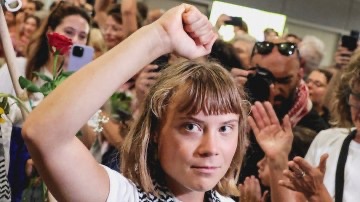

In an age of curated feeds and sanitised opinions, where moral stands are too often tested against analytics reports, the image of Greta Thunberg, seated calmly after being kidnapped by Israeli soldiers, strikes with the force of a moral thunderclap. Her journey with the Global Sumud Flotilla was never merely a protest; it was a deliberate, conscious pilgrimage into the heart of darkness engulfing Gaza. She did not simply hope to draw attention; she knew, with chilling certainty, that she and her comrades would be abducted by the Israeli regime. She knew they would face the intimidation, the humiliation, and the psychological torture that is the hallmark of such detentions. And yet, she went.
This single, profound act speaks volumes about Thunberg as a leader and a source of inspiration for humanity. It reveals a quality so rare in our modern leadership that it seems almost revolutionary: unwavering moral courage. This is not the courage of the keyboard warrior, firing off tweets from a safe distance. This is the raw, physical courage of placing one’s own body on the line, of staring into the abyss of state power and refusing to blink. She used her platform not as a shield to protect her privilege, but as a sword, willingly plunging it into the most contentious issue of our time to awaken a slumbering world to the genocide unfolding in Gaza. Her leadership is etched not in likes, but in risk; not in followers, but in witness.
This boldness throws into stark, unflattering relief the deafening silence of the vast majority of popular social media influencers. Consider the sprawling empires of the digital elite: the lifestyle gurus peddling serenity, the beauty moguls showcasing glamour, the fitness experts promising transformation. Their platforms are global, their audiences numbered in the tens of millions, their influence undeniable. And on the issue of Gaza? A void. A calculated, palatable, and utterly cowardly silence.
Why? Because their currency is not justice, but relevance. Their leadership is not rooted in principle, but in popularity. To speak out against a genocide, to use the precise and legally sound term that Thunberg does, is to invite controversy. It is to alienate segments of a carefully cultivated audience, to risk lucrative brand deals, to anger the algorithmic gods that govern their visibility. For them, morality is a variable in a cost-benefit analysis. The relentless bombardment of children, the starvation of civilians, the destruction of hospitals and universities—all of this is reduced to a question of ‘brand safety’. They dare not speak, for fear of losing the very thing that gives them a voice: their follower count. In this, they are not leaders, but followers themselves—slaves to the metrics of their own influence.
This highlights a chasm in our understanding of what true leadership means for humanity. The influencer, in their silence, embodies a leadership of convenience. It is a fair-weather friendship with justice, offering support only when it is easy, fashionable, and profitable. They offer distraction, a digital opiate to numb the conscience from the horrors they refuse to name.
Thunberg, by contrast, represents a leadership of conscience. It is a leadership that understands that some truths are so urgent, some injustices so monstrous, that to remain silent is to be complicit. Her action screams a challenge that their silence cannot mute: what is your influence for, if not for this? What is your platform, if it cannot bear the weight of truth? She demonstrates that real inspiration is not born from perfection and popularity, but from authenticity and sacrifice. It is messy, difficult, and often deeply unpopular with those in power.
This is the profound importance of moral leadership that this moment underscores. Humanity does not stumble into darkness because of the actions of the wicked alone, but because of the thundering silence of those who have the light to show the way. The influencers, with their millions of followers, have built megaphones but have chosen to whisper only platitudes. Thunberg, with her unshakeable conviction, uses her voice as a lever, trying to shift the very axis of our collective morality.
In the end, the story of Greta Thunberg and the flotilla is not just about Gaza. It is a parable for our time. It forces us to ask ourselves whom we truly admire: those who have built vast audiences but lack the courage to lead them, or those who, with a steadfast heart, walk directly into the storm of controversy for a cause greater than themselves. History will not remember the names of those who stayed silent to keep their sponsors happy. But it will remember the young woman who, faced with a genocide, dared to sail towards it, knowing the price she would pay, and in doing so, gave the world a priceless lesson in what it truly means to lead.
 Edward Torsney
Leave a comment