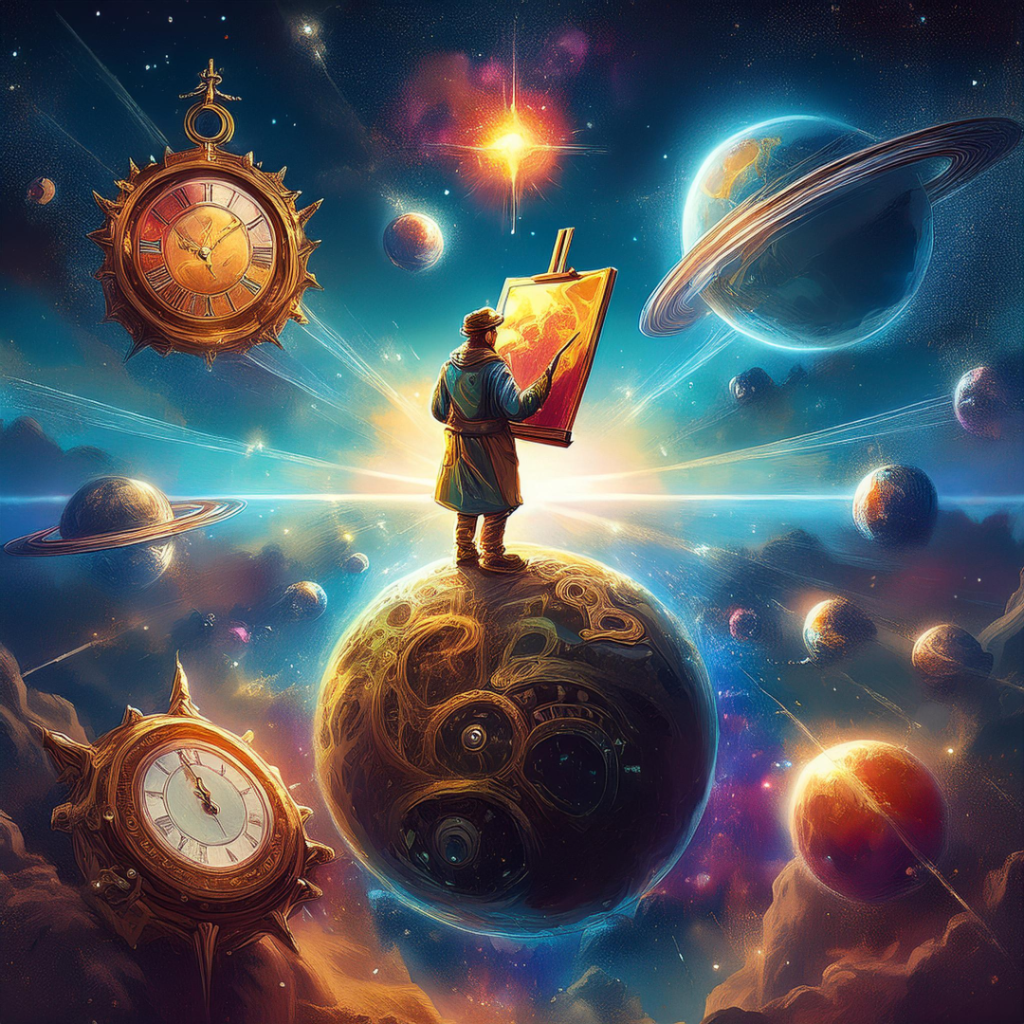
You’ve probably heard of Time Based Media in Fine Art circles, and you’ve probably even visited exhibitions in the Tate Modern or The Guggenheim and experienced Time Based Art first hand. We use the word “experienced” rather than “seen” in reference to Time Based Art. There is an important distinction there. Where most traditional forms of art (painting and sculpture) are primarily designed to be “seen” in either 2D or 3D, a time based work of art must be experienced in 4 dimensions – that is 3 spatial dimensions and one temporal dimension.

What is Time Based Media?
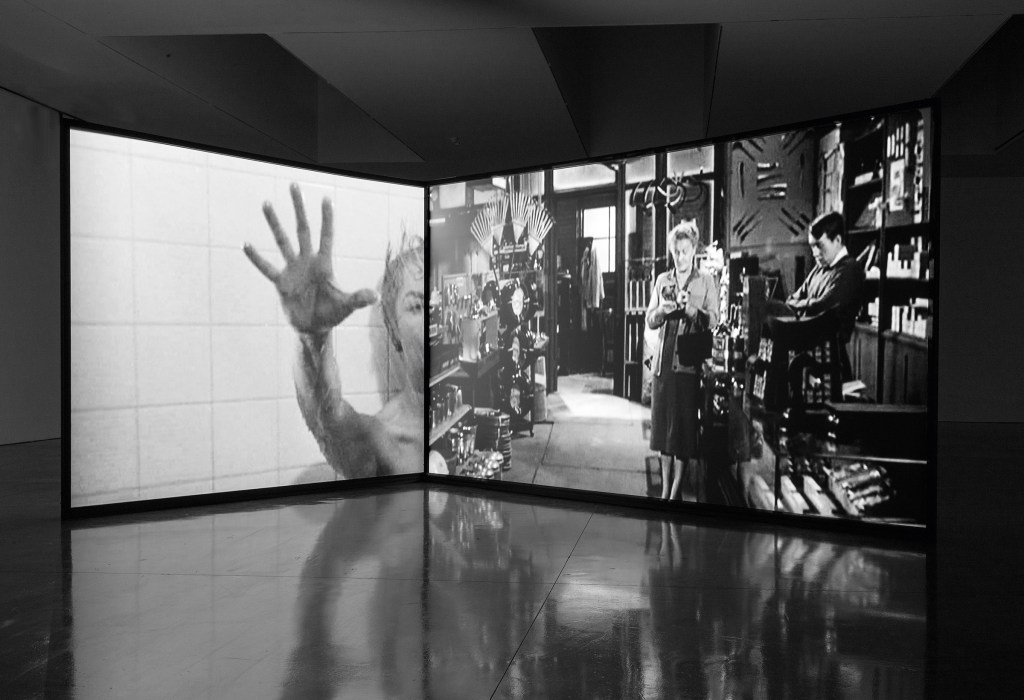
Artists such as Edward Torsney have produced artworks that include video, archive film, audio, or non-linear computer generated montages and motion graphics. These are all considered time-based artworks because they have a duration and they change over time. The viewer may experience the whole artwork or in some cases such as “24 hour Psycho” by Douglas Gordon, they may experience just a few seconds of the moving image work “time-stretched” to fill the few minutes it takes to traverse the gallery installation.
An interesting angle which Ed Torsney explored was to use amateur found film (in his case from a Film Archive) which he telecines from 8mm and 16mm reels to a digital, non-linear format and creates new narratives from cast-offs from the past to be viewed in the present. Thus Edward leaps through time into the 1930s and steals a forgotten moment before being catapulted back to the present, with his stolen moment in-hand to reframe it within a brand new narrative and a brand new time based art experience for viewers who weren’t even born when the moment occurred.
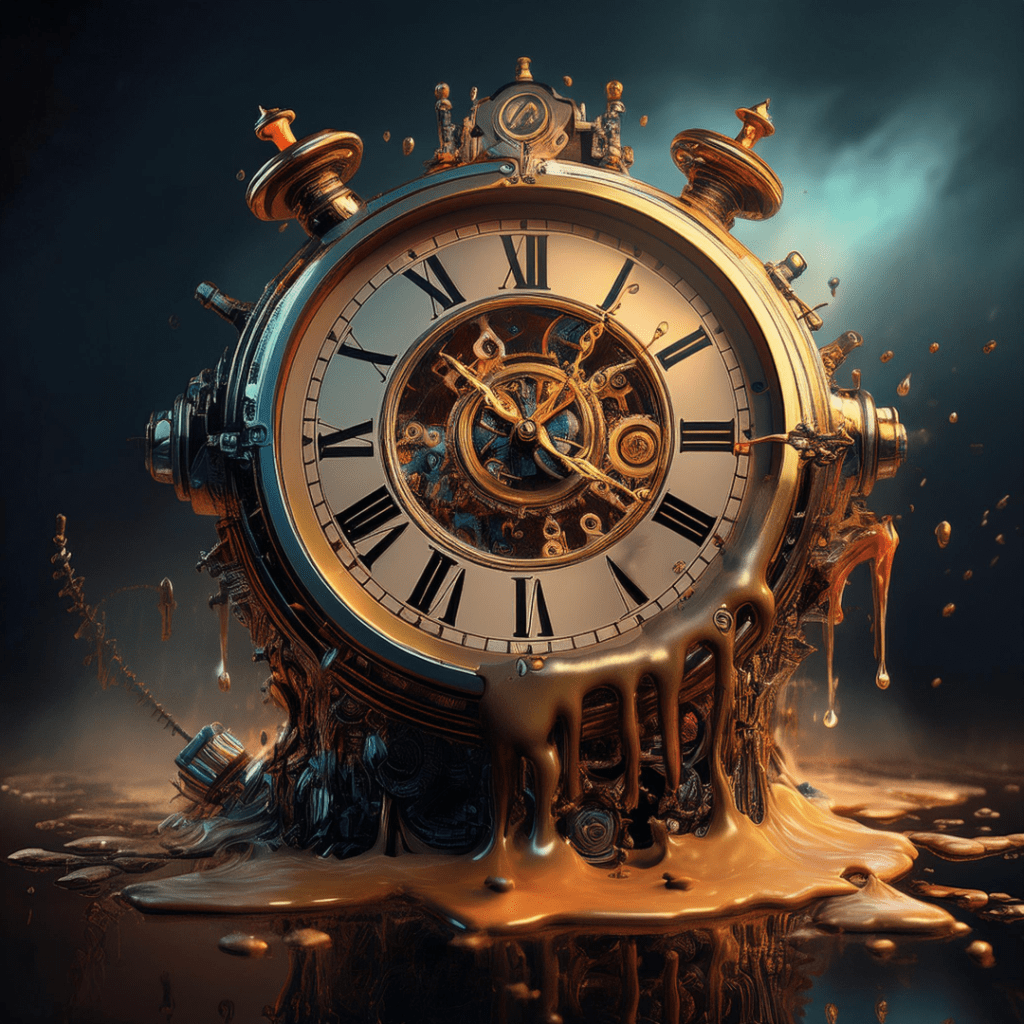
Time Based Art comes in many shapes and forms but it always uses time and our experience of time as its central concept. Think of how master oil painters talk about the play of light in their work and apply the same principles to the play of time. How does time change the work? How is my experience changing over time? How do the layers of time in the work make me feel? Take a look at “Seasons” by Edward G Torsney and see if you can tap into the various layers of time that he’s woven into the work. Do you still feel that time is simply “one thing after another”? Or are you starting to see how time itself can be a whole new dimension of experience in your relationship with art?

by Ed Torsney
Why is Entropy important?
Entropy is another concept often explored by Time-Based artists. Everything in the universe changes over time. Sometimes things change on a timescale far too huge for us to notice, like the raising of mountains and their erosion to sand or the birth and death of stars and their implosion into black holes. Within the timescales we’re able to experience though, the inexorable miracle of entropy still reigns: in the form of flowers bursting into bloom and then drying and falling, fruit ripening and then turning mouldy and giving way to seeds taking hold in the earth or even the the death and decomposition of the human body. All things change from a state of what we perceive as order, to other states which we perceive as chaos. But there’s beauty in both order and chaos and mostly there’s beauty in the process that leads from one state to the other for neither chaos, nor order are absolute – everything is always in flux. Even our understanding, our perception and always our emotions. This is the place where Time Based Art lives – in the rivers and oceans of everythingness.
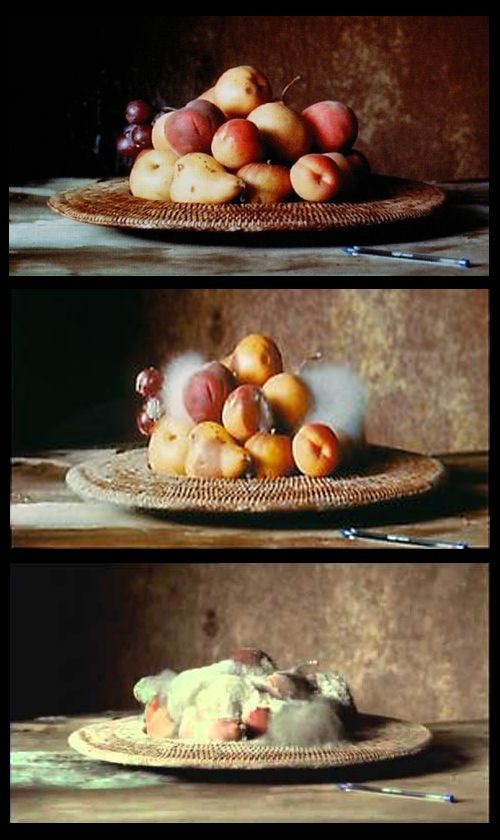
Michael Snow and Sam Taylor-Wood
Please leave a comment below if you have any thoughts on Time Based Arts. This is a new blog and there’s going to be many more posts on a wide and varied range of art-related topics. So if you like this kind of thing. Please subscribe and if you have a blog, Ed will subscribe to you.
Thank you for reading.
 Edward Torsney
Leave a comment